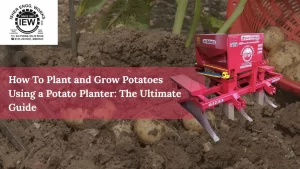

Isher Engineering Works understands that successful potato farming begins much earlier than harvest—it starts with healthy slips and the right planting approach. Whether you are a small farmer or managing large-scale cultivation with a potato planter, knowing the correct techniques for growing and handling slips can directly impact yield and crop quality. Sweet potato slips are young shoots grown from mature sweet potatoes and are essential for productive farming. Choosing the best way to plant sweet potatoes depends on soil condition, climate, available resources, and whether mechanized tools like a potato planter are used.
Let’s dive into the three most effective methods.
Method 1: Growing Sweet Potato Slips in Water
One of the simplest and most commonly used methods is growing slips in water. This technique is especially popular among beginners and small-scale farmers who want healthy slips without complex infrastructure.
To begin, select healthy, disease-free sweet potatoes. Cut them in half and place them in a container filled with clean water, ensuring only the bottom portion is submerged. Within a few days, roots begin to develop, and shoots (slips) start emerging from the top. Over 2–3 weeks, these slips grow strong enough to be separated.
Method 2: Growing Slips in Soil Beds or Nursery Trays
For farmers aiming for higher output, growing slips in soil beds or nursery trays is a more scalable solution. This method is often considered the best way to plant sweet potatoes when preparing for mechanized planting. The potatoes are lightly covered, watered regularly, and kept in warm conditions. Shoots begin to emerge within two weeks and continue to grow steadily.
This method produces stronger root systems and sturdier slips, making them ideal for planting sweet potato slips using a potato planter.
Method 3: Field Bed Sprouting (Traditional Method)
The third method involves sprouting sweet potato slips directly in prepared field beds. This traditional approach is widely used in regions with favorable climates and sufficient land.
Farmers prepare well-drained beds and place sweet potatoes directly into the soil, covering them lightly. Regular irrigation and proper sunlight encourage sprouting. After a few weeks, slips grow naturally and are cut from the parent potato.
Also Read : How to properly use maize thresher machine
How do you Plant Sweet Potato Slips
Once slips are ready, the field should be well-prepared with loose, aerated soil. Slips are planted vertically or at a slight angle, with roots fully covered and leaves exposed. Spacing is critical for healthy tuber development. Using a potato planter ensures uniform depth and spacing, which improves aeration and nutrient absorption. For farmers wondering about the best way to plant sweet potatoes, combining healthy slips with mechanized planting often delivers the best results.
After planting sweet potato slips, light irrigation helps establish roots. Overwatering should be avoided in the initial days. Within a week, slips begin to settle, and vigorous vine growth follows.
Role of a Potato Planter in Potato Slip Transplanting
- Ensures uniform spacing between rows and plants, helping farmers achieve healthy vine growth and better root development.
- Reduces manual labor and physical strain, making planting potato slips faster and more comfortable for field workers.
- Helps maintain the correct planting depth, which is essential for strong root establishment and higher survival rates.
- Improves planting speed and efficiency, especially in large fields where time and accuracy matter the most.
- Minimizes damage to delicate slips during transplanting by placing them gently into prepared soil.
- Supports consistent crop alignment, making irrigation, fertilization, and weeding easier throughout the season.
Growing sweet potato slips doesn’t have to be complicated. Whether you choose water propagation, soil beds, or traditional field sprouting, success depends on healthy slips and proper planting techniques. When combined with the right tools, especially a potato planter, these methods become even more effective.
By understanding these three methods and learning how to plant sweet potato slips correctly, farmers can confidently adopt the best way to plant sweet potatoes for their land. With experience, planning, and support from companies like Isher Engineering Works, sweet potato cultivation becomes not only easier but far more profitable.