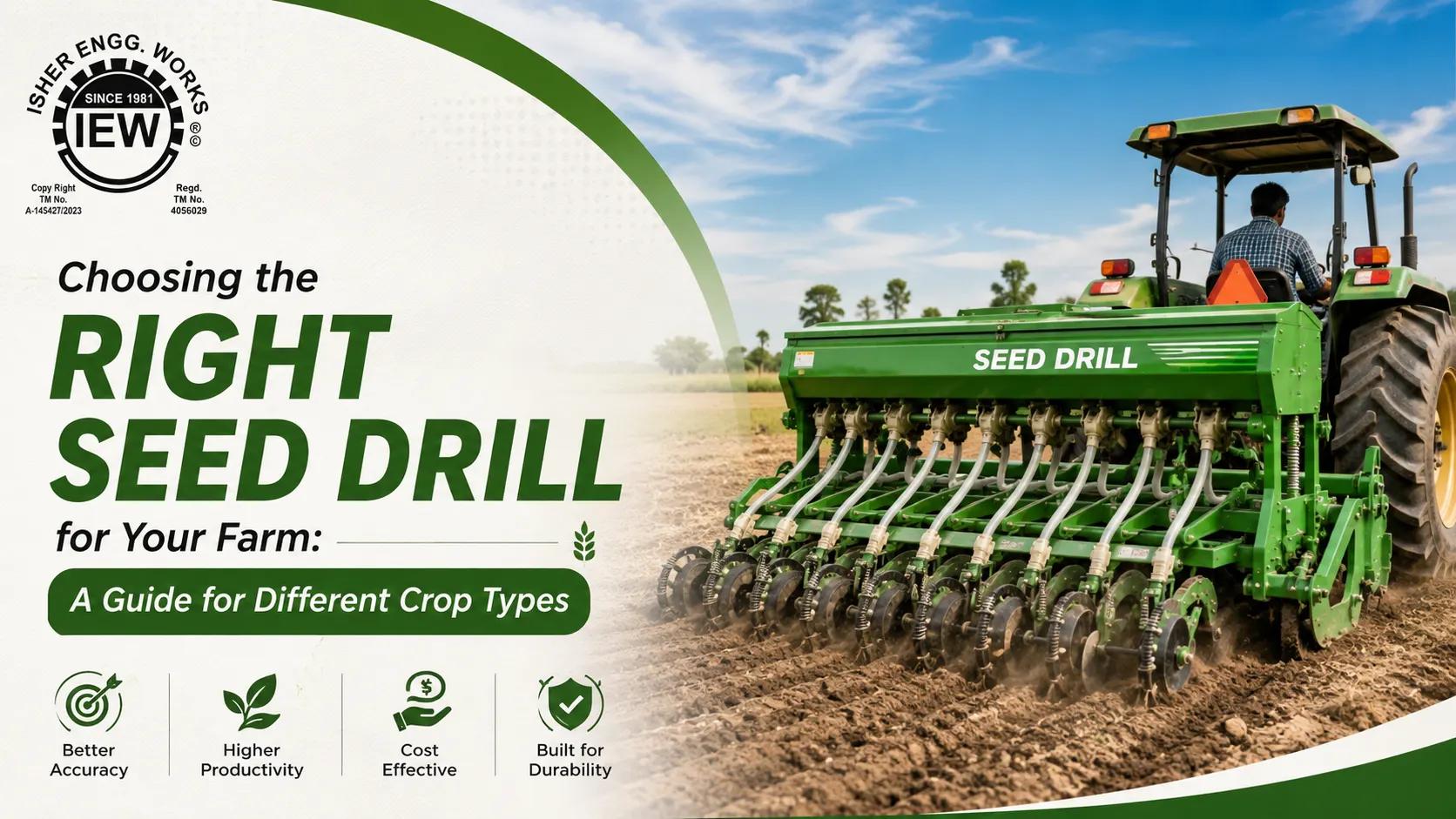
Modern agriculture relies heavily on efficient machinery to improve productivity and maximize crop yields. Among the most important pieces of farm equipment is the seed drill, a machine designed to sow seeds at the correct depth and spacing for optimal germination. However, not all seed drills are the same, and choosing the right one for your farm can significantly impact your farming success.
Whether you grow wheat, maize, pulses, oilseeds, or vegetables, selecting the appropriate seed drill requires careful consideration of your crop type, soil conditions, farm size, and operational requirements. Understanding these factors can help farmers make informed decisions and achieve better results during the sowing season.
Right Seed Drill Matters
Proper sowing improves seed-to-soil contact, enhances germination rates, and promotes healthy crop growth. When seeds are distributed evenly, plants receive adequate space, nutrients, sunlight, and water, leading to higher productivity.
Using the wrong seed drill can result in uneven seed distribution, poor crop establishment, increased seed wastage, and reduced yields. Therefore, investing in the right equipment is essential for efficient and profitable farming.
Different Types of Seed Drills
Before selecting a seed drill, it is important to understand the various types available in the market.
- Conventional Seed Drill: Conventional seed drills are widely used for crops such as wheat, barley, and pulses. They are suitable for prepared fields and provide consistent seed placement across large areas.
- Seed Cum Fertilizer Drill: These machines simultaneously place seeds and fertilizers into the soil. This dual-functionality improves efficiency and ensures that crops receive nutrients at the time of sowing.
- Zero Till Seed Drill: Zero till seed drills are designed for conservation agriculture practices. They allow farmers to sow seeds directly into untilled soil, reducing soil disturbance and preserving moisture.
- Multi-Crop Seed Drill: A multi-crop seed drill is highly versatile and can handle a variety of seeds with different sizes and sowing requirements.
Seed Drill for Wheat Farming
Wheat is one of the most widely cultivated crops, and achieving a uniform plant population is critical for high yields. For wheat farming, conventional seed drills and seed cum fertilizer drills are often preferred.
These machines ensure:
- Uniform seed spacing
- Consistent sowing depth
- Efficient fertilizer application
- Reduced seed wastage
Farmers with larger wheat-growing areas may benefit from wider seed drills that cover more ground in less time.
Best Seed Drills for Maize Cultivation
Maize requires precise row spacing and accurate seed placement. Precision seed drills are often recommended because they place seeds individually at predetermined intervals.
Benefits include:
- Better plant stand establishment
- Reduced competition between plants
- Improved nutrient utilization
- Higher crop productivity
Precision sowing becomes especially important when cultivating hybrid maize varieties where seed costs are relatively high.
Seed Drills for Pulses and Oilseeds
Pulses and oilseeds often involve smaller seed sizes that require careful handling during sowing. A multi-crop seed drill can be an excellent choice for these crops because it allows adjustments for varying seed sizes and sowing rates.
Proper seed placement helps:
- Improve germination
- Reduce seed losses
- Achieve uniform crop growth
- Enhance overall farm efficiency
Farmers growing crops such as soybean, mustard, gram, and lentils can benefit significantly from adjustable seed drill systems.
Factors to Consider Before Buying a Seed Drill
- Crop Type: Understanding the specific needs of your crops is the first step toward selecting the right equipment.
- Farm Size: The size of your farm directly influences the capacity of the seed drill required. Larger farms often require high-capacity machines that can cover more acreage efficiently.
- Soil Conditions: Soil texture and field preparation methods affect seed drill performance. Certain drills perform better in loose soils, while others are designed for no-till or minimum-till farming.
- Tractor Compatibility: Ensure that the seed drill is compatible with your tractor’s horsepower and hydraulic system.
- Maintenance Requirements: A machine that is easy to maintain can reduce downtime and operating costs. Consider availability of spare parts and service support before making a purchase.
Advantages of Using the Right Seed Drill
Selecting the appropriate seed drill provides numerous benefits:
- Improved Seed Placement: Accurate placement ensures better germination and healthier crop growth.
- Higher Productivity: Efficient sowing operations save time and labor while increasing field productivity.
- Reduced Seed Wastage: Modern seed drills distribute seeds precisely, minimizing losses and lowering input costs.
- Better Crop Uniformity: Uniform plant populations contribute to improved crop management and harvesting efficiency.
- Enhanced Profitability: Higher yields and lower operational costs lead to better overall farm profitability.
Why Choose Isher Engineering Works?
When it comes to reliable agricultural machinery, Isher Engineering Works is a trusted name in the industry. Our company continues to offer high-quality seed drills designed to meet the diverse needs of modern farmers.
With a strong focus on innovation, durability, and performance, Isher Engineering Works manufactures equipment that supports efficient sowing operations across various crop types. Whether you require a conventional seed drill, multi-crop model, or specialized sowing equipment, our company delivers solutions that help farmers maximize productivity and profitability.
Choosing the right seed drill is a crucial decision that directly impacts crop establishment, yield potential, and overall farm efficiency. By considering factors such as crop type, soil condition, farm size, and operational requirements, farmers can select equipment that meets their specific needs. From wheat and maize to pulses and oilseeds, every crop benefits from proper seed placement and accurate sowing. With dependable solutions from Isher Engineering Works, farmers can confidently invest in machinery that helps improve productivity while supporting sustainable agricultural practices .