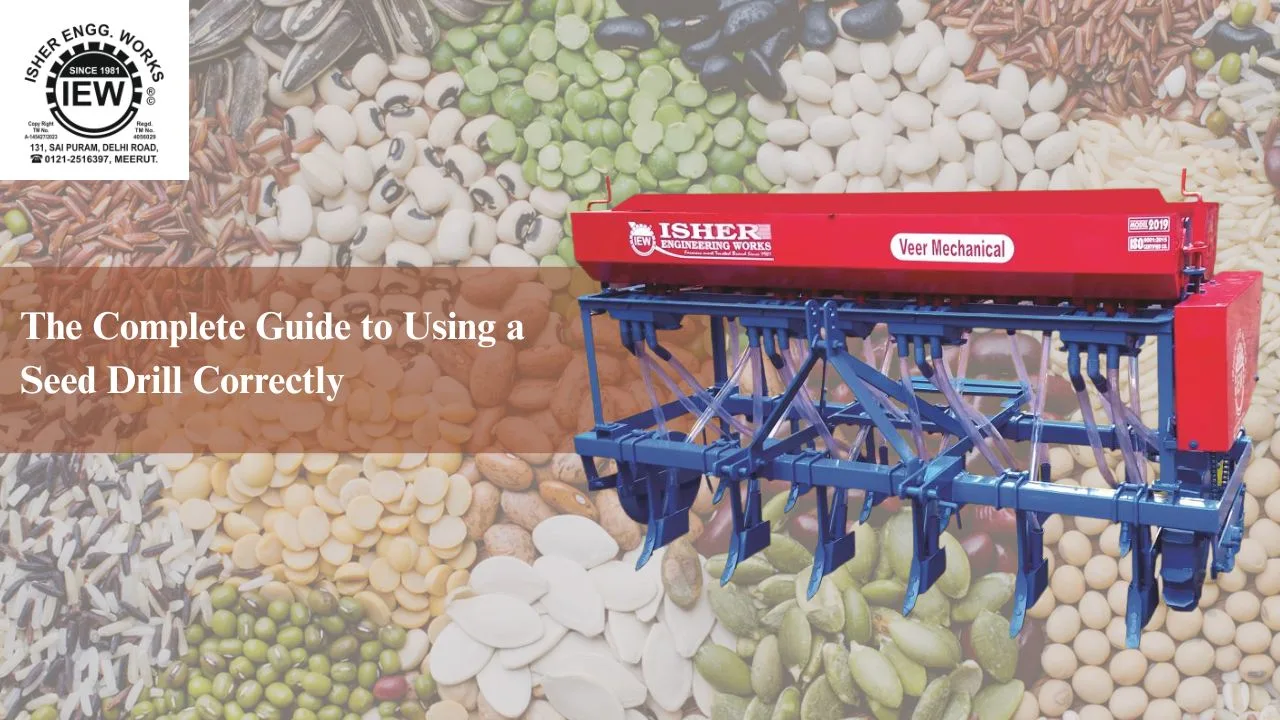
Isher Engineering Works is a trusted name in the agricultural equipment industry, known for manufacturing reliable and efficient farming machinery. Among the many tools that have transformed modern farming, the seed drill holds a special place. It helps farmers sow seeds accurately, save time, and improve crop productivity. Understanding the machine, its parts, and the calibration process can help farmers achieve better field performance and higher yields.
What is a Seed Drill?
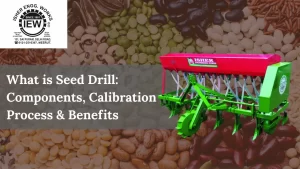
It is important to define seed drills properly. A seed drill is an agricultural implement used for sowing seeds in the soil at a uniform depth and spacing. Instead of broadcasting seeds randomly, the machine places them in rows, ensuring proper seed distribution and better germination.
Aldo Read : आलू बोने की आटोमेटिक मशीन: जानें कीमत, उपयोग, और सही तरीका
Components of Seed Drill
To understand how a seed drill works, it is essential to know the components of seed drill. Each component plays a vital role in ensuring accurate seed placement.
- Seed Box: The seed box is the storage container where seeds are loaded before sowing. It holds a sufficient quantity of seeds and supplies them to the metering mechanism.
- Seed Metering Device: This is one of the most important components of seed drill. It controls the rate at which seeds are released from the seed box. Proper metering ensures uniform seed distribution across the field.
- Seed Tubes: Seed tubes transport seeds from the metering mechanism to the furrow openers. These tubes help maintain a smooth flow of seeds during operation.
- Furrow Openers: Furrow openers create narrow trenches in the soil where seeds are deposited. Different types of furrow openers are available depending on soil conditions and crop requirements.
- Covering Device: After seeds are placed in the furrows, the covering device pushes soil over them. This protects seeds from birds, wind, and environmental factors.
These components of seed drill work together to provide accurate sowing and efficient field performance.
Calibration of Seed Drill
One of the most important steps before sowing is the calibration of seed drill. Calibration ensures that the machine delivers the correct quantity of seeds per hectare. Improper calibration can lead to over-seeding or under-seeding, both of which affect crop yield.
Why Calibration is Important
The calibration of seed drill helps farmers:
- Maintain the recommended seed rate
- Reduce seed wastage
- Ensure uniform plant population
- Improve crop establishment
- Increase overall productivity
Steps for Calibration of Seed Drill
Step 1: Clean the Machine
Before calibration, ensure the seed box, seed tubes, and metering devices are clean and free from debris.
Step 2: Fill the Seed Box
Add a known quantity of seeds into the seed box. This helps measure seed output accurately during testing.
Step 3: Raise the Drill
Lift the seed drill so that the drive wheel can rotate freely without touching the ground.
Step 4: Mark the Drive Wheel
Mark a point on the wheel and rotate it for a predetermined number of revolutions corresponding to a specific field area.
Step 5: Collect the Seeds
Place collection trays or bags under the seed tubes and collect the seeds discharged during wheel rotation.
Step 6: Weigh the Seeds
Measure the weight of the collected seeds and compare it with the recommended seed rate.
Step 7: Adjust the Metering Device
If the output differs from the desired rate, adjust the metering mechanism and repeat the process until accurate results are achieved.
Proper calibration of seed drill ensures efficient seed utilization and optimal crop growth.
Benefits of Using a Seed Drill
The popularity of the seed drill in agriculture continues to grow because of its numerous advantages.
- Uniform Seed Placement: The machine places seeds at consistent depths and spacing, leading to uniform germination and crop growth.
- Reduced Seed Wastage: Unlike traditional broadcasting methods, seed drills place seeds precisely where needed, minimizing losses.
- Better Crop Yield: Accurate sowing improves plant population and nutrient utilization, resulting in higher yields.
- Labor Savings: A seed drill reduces the need for manual sowing, saving both labor and time.
- Improved Soil Utilization: The machine creates proper seed placement conditions, allowing better root development and nutrient absorption.
- Cost-Effective Farming: Although the initial investment may seem significant, the long-term savings on seeds, labor, and field operations make it a profitable choice.
Why Choose Isher Engineering Works?
Isher Engineering Works continues to offer high-quality agricultural machinery designed to meet modern farming requirements. Our company focuses on durability, precision, and user-friendly operation. Farmers trust their equipment because it helps improve productivity while reducing operational costs.
Whether you need a seed drill for small farms or large agricultural operations, Isher Engineering Works can offer dependable solutions that support efficient farming practices.
To define seed drill machine, it is a machine that places seeds accurately into the soil at the desired depth and spacing. Understanding the components of seed drill, performing proper calibration of seed drill, and using it correctly can significantly improve farming efficiency. The growing adoption of seed drill in agriculture demonstrates its importance in modern crop production. If you are looking for reliable agricultural equipment, Isher Engineering Works continues to offer quality machinery that helps farmers achieve better yields and sustainable farming success.