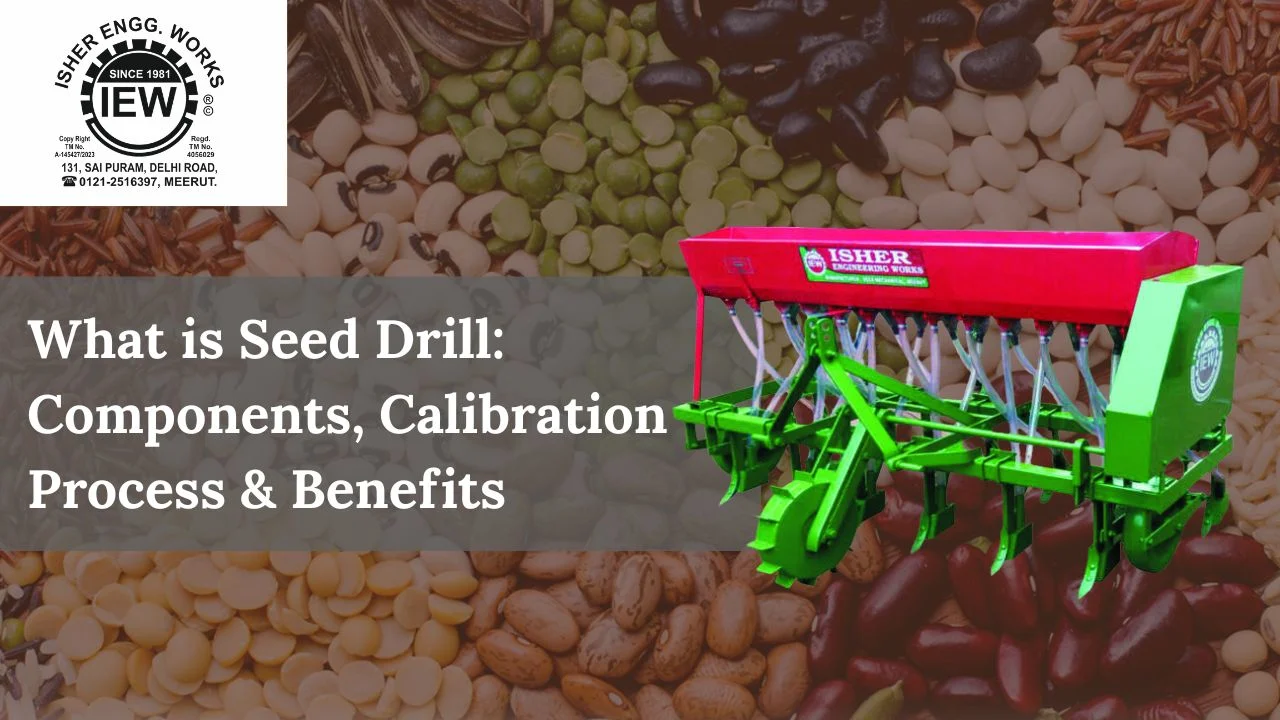
Modern farming practices have transformed agriculture by improving efficiency, reducing labor, and increasing crop yields. One of the most important innovations in the agricultural sector is the seed drill. Farmers today prefer advanced sowing equipment because it ensures accurate seed placement and better germination. Isher Engineering Works offer reliable agricultural machinery designed to improve field productivity and support modern farming requirements.
What is a Seed Drill? (सीड ड्रिल क्या है?)
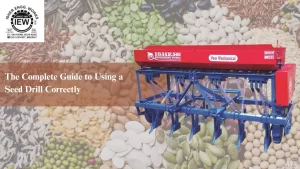
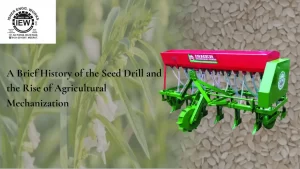
A seed drill is an agricultural machine used for sowing seeds at a uniform depth and spacing in the soil. The drilling method of sowing is considered one of the most efficient methods because it ensures proper seed distribution and optimum plant growth. Seed drills are widely used for crops such as wheat, maize, soybean, pulses, and various oilseeds.
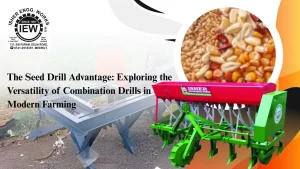
Different types of seed drills are available in the market, including the seed cum fertilizer drill and the zero till seed drill, which help farmers save time and improve field efficiency.
(सीड ड्रिल एक कृषि यंत्र है जो बीजों को खेत में सही गहराई और समान दूरी पर बोने का कार्य करता है। यह मशीन बीजों को सीधे मिट्टी में डालकर उन्हें मिट्टी से ढक देती है, जिससे बीजों का अंकुरण बेहतर होता है और फसल की वृद्धि समान रूप से होती है। सीड ड्रिल का उपयोग करने से बीजों की बर्बादी कम होती है, श्रम की बचत होती है और उत्पादन क्षमता बढ़ती है। आधुनिक खेती में गेहूं, चना, मक्का, सोयाबीन तथा अन्य फसलों की बुवाई के लिए सीड ड्रिल का व्यापक रूप से उपयोग किया जाता है।)
Components of a Seed Drill
The efficiency of a seed drill depends greatly on its design and components. Here are the major parts that make the machine effective:
- Seed Box: The seed box stores the seeds before they are delivered into the soil. Its design ensures smooth flow and prevents seed clogging. The size of the box varies depending on the crop type and capacity required.
- Seed Metering Mechanism: This is the heart of the seed drill. It controls the flow rate of seeds from the box into the tubes. Metering wheels, fluted rollers, or cell-type mechanisms ensure accurate seed delivery.
- Seed Tubes: Seed tubes carry the seeds from the metering device to the furrow openers. They are designed to reduce seed damage and ensure smooth flow.
- Furrow Openers: These components open up the soil to create a channel for seed placement. Different types of openers are used depending on the soil condition and crop requirement such as shoe-type, disc-type, or shovel openers.
- Covering Devices: After the seed is placed at the desired depth, covering devices push the soil back to cover the seeds. This ensures better soil-seed contact, which is essential for germination.
- Frame and Hitching System: The frame holds all components together, while the hitching system connects the seed drill to a tractor or animal power, depending on the model.
Isher Engineering Works offer well-designed seed drills with durable components to withstand Indian farming conditions.
Working Principle of Seed Drill
The working principle of seed drill is simple yet highly effective. As the tractor moves forward, the ground wheel rotates and powers the seed metering mechanism. The metering unit releases seeds at a predetermined rate into the seed tubes. The seeds travel through the tubes and are deposited into furrows created by the furrow openers. Advanced models such as the seed cum fertilizer drill simultaneously place seeds and fertilizer, providing essential nutrients during sowing. Similarly, the zero till seed drill enables direct sowing without extensive land preparation, reducing cultivation costs and preserving soil moisture.
Calibration Process of a Seed Drill
Calibration is essential to ensure the seed drill delivers the right number of seeds per hectare and maintains consistency throughout the field. Isher Engineering Works designs seed drills that are simple to calibrate, making them farmer-friendly.
Step 1: Select the Crop and Seed Rate
First, the farmer decides the type of crop and recommended seed rate—this helps set the metering mechanism correctly.
Step 2: Adjust the Metering Device
The metering roller or wheel is adjusted according to the desired seed output. A trial run is usually performed before field operation.
Step 3: Collect Seeds for Measurement
A few metering tubes are selected, and seeds are collected from them over a certain distance or simulated rotation. This helps determine whether the correct amount of seeds is being discharged.
Step 4: Calculate Seed Rate
The collected seeds are weighed. Using simple calculations, farmers check if the seed rate matches the recommended value.
Step 5: Fine-Tuning
If the seed rate is higher or lower than necessary, further adjustments are made to the metering mechanism until the correct calibration is achieved.
Types of Seed Drills
Today’s market offers a wide range of seed drills to suit different farming needs.
- Traditional Seed Drills – Suitable for basic sowing operations.
- Tractor-Mounted Seed Drills – Ideal for large-scale farming.
- Small Seed Drill – Best for small farms and limited landholdings.
- Multi-Crop Seed Drills – Designed to handle different seed sizes.
With increasing demand, many farmers actively search for a seed drill for sale that balances quality, price, and durability. Isher Engineering Works focus on reliability and performance to meet these expectations.
Seed Drill vs Traditional Sowing
| Parameter | Seed Drill | Traditional Sowing |
|---|---|---|
| Seed Placement | Uniform depth and spacing | Uneven seed distribution |
| Seed Wastage | Very low | High seed wastage |
| Germination Rate | Better germination | Lower germination |
| Labor Requirement | Less labor required | More manual labor needed |
| Crop Yield | Higher productivity and yield | Comparatively lower yield |
Seed Drill Calibration Formula
The commonly used seed drill calibration formula is:
Seed Rate (kg/ha) = (Collected Seed Weight × 10,000) ÷ (Effective Width × Distance Covered)
Proper calibration helps farmers avoid over-seeding or under-seeding, both of which can negatively impact crop yield. It also improves seed utilization and reduces production costs. Farmers should calibrate the machine before every sowing season to maintain accuracy and consistency.
Common Problems in Seed Drill Operation
Although seed drills are highly efficient, farmers may occasionally encounter operational issues. Some common problems in seed drill operation include:
- Blocked Seed Tubes: Dust, moisture, or damaged seeds can block the seed tubes and disrupt seed flow.
- Uneven Seed Distribution: Improper calibration or worn-out metering components may result in uneven seed placement.
- Furrow Opener Wear: Continuous use can cause furrow openers to wear out, affecting sowing depth.
- Chain and Drive Mechanism Issues: Loose chains or damaged drive systems can reduce machine efficiency.
- Improper Ground Wheel Contact: Poor wheel contact may affect the metering mechanism and seed rate accuracy.
Regular inspection, cleaning, and maintenance can prevent most of these problems and improve machine performance.
Benefits of Using a Seed Drill
Using a seed drill provides several advantages for modern agriculture:
- Accurate seed placement and spacing.
- Improved germination rates.
- Reduced seed wastage.
- Better crop establishment.
- Lower labor requirements.
- Increased productivity and profitability.
- Efficient fertilizer application with a seed cum fertilizer drill.
- Conservation of soil moisture through a zero till seed drill.
Why Choose Isher Engineering Works?
Isher Engineering Works offer high-quality agricultural machinery designed to meet the real needs of farmers. Our seed drills are built with robust materials, easy maintenance features, and efficient performance in diverse field conditions. Whether you are looking for a heavy-duty model or a small seed drill for compact farming, choosing the right manufacturer ensures long-term reliability.
Our machines are:
- Durable and long-lasting
- Easy to operate
- Efficient in seed saving
- Suitable for various soil conditions
- Designed with precision engineering
By choosing Isher Engineering Works, farmers get a partner committed to enhancing agricultural productivity.
A seed drill is an essential agricultural machine that enhances sowing efficiency and supports higher crop productivity. Trusted manufacturers such as Isher Engineering Works offer advanced seed drill solutions that help farmers adopt modern sowing techniques and maximize agricultural success. Whether using a conventional model, a seed cum fertilizer drill, or a zero till seed drill, investing in quality equipment can significantly improve farming outcomes.